
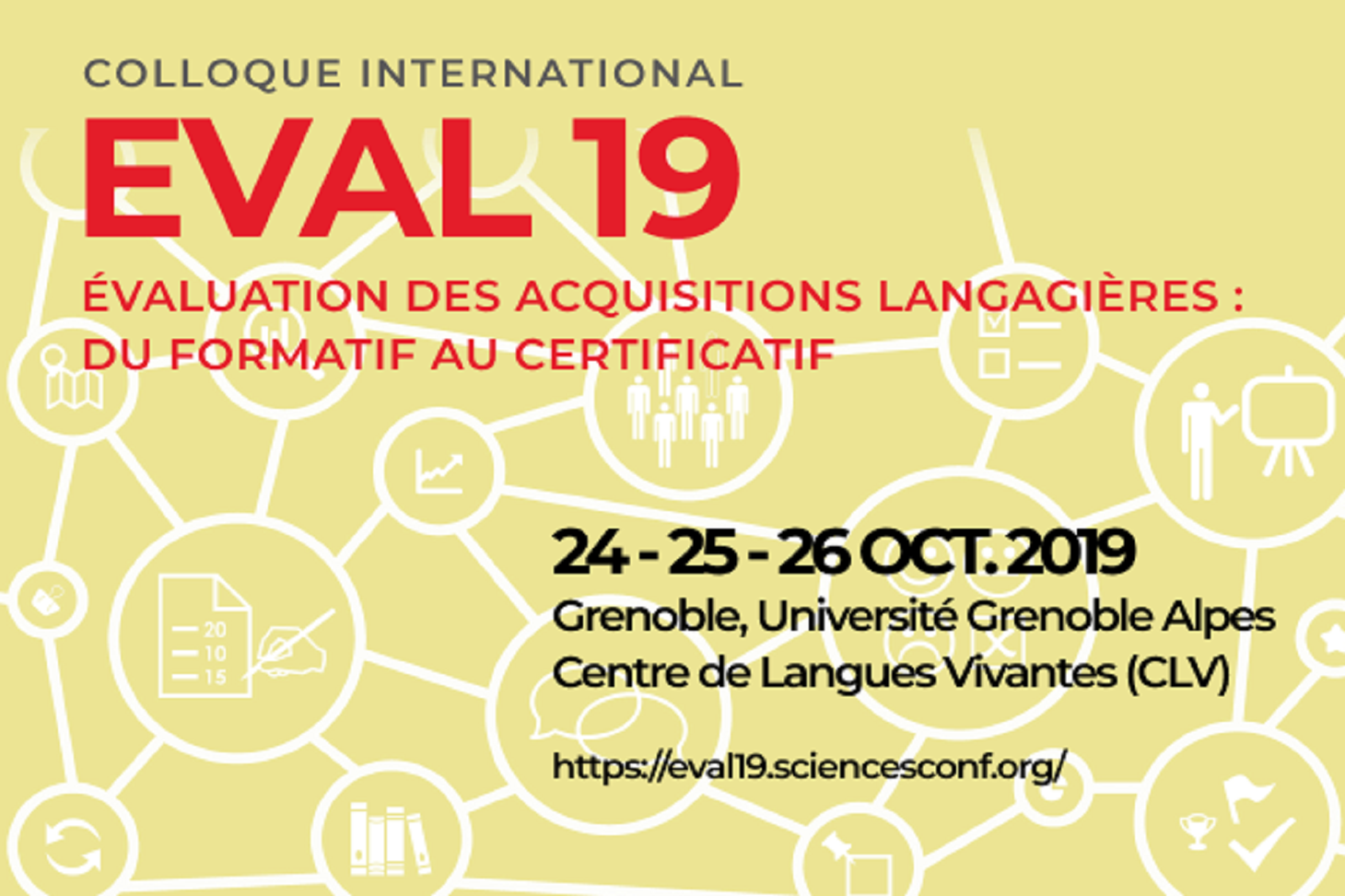
Since the birth of assessment and testing as scientific disciplines in the 1950s, the dominant trends in language-culture didactics have always been reflected in the forms that language tests have taken: “discrete point testing” (Lado, 1961) was inspired by the structuralist and behaviorist approaches in psychology and cognitive sciences, then the communicative testing (Morrow, 1979) put forward the textual, written and oral unity, the ability to convey aBeyond formal acceptability, and the assessment of reception and production skills.
In recent years, the scientific community has focused on key emerging concepts, such as situational and interactional authenticity in 'task-based testing' or assessment for formative or diagnostic purposes, to name just a few fundamentals (Hamp-Lyons, 2016). Today's candidates increasingly present multilingual language profiles, are or will be internationally mobile and competent in the field of ICTE, whatever the training and assessment context (school, university, certification center, language center, LANSAD, etc.).
Through the following axes, we'd like to look at some of the current topics of discussion in language assessment research.
Axis 1: Validity of a language evaluation system: theoretical reflections and feedback.
Axis 2: Evaluation of intercomprehension and plurilingual approaches
Axis 3: Evaluation and language interactio
Discover the interventions of the conference’s guest-speakers.
Intervention of Tim McNamaraIntervention of James Purpura
Intervention of Anna Cardinaletti
Round Table with Jean-Paul Narcy-Combes et Sébastien Georges